

The Hidden Cost of Unstructured Development (And How to Avoid It)
From "Vibe Coding" to Maintenance Hell: Why rushing to production today mortgages your engineering future.
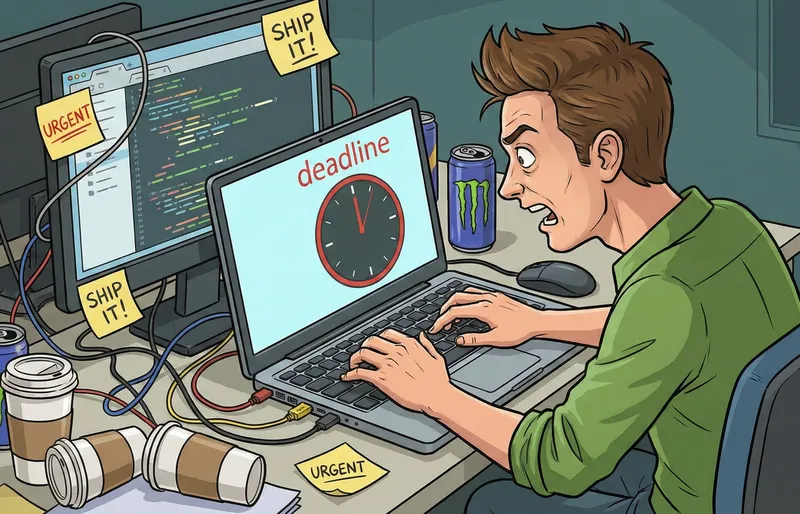
It’s 3:30 PM on a Friday. The product manager rushes over—or pings you on Slack with all caps—about a "critical opportunity." A major partner wants a specific integration, and if we can demo it by Monday morning, we close a massive deal.
The engineering team looks at the requirements. Doing it "right"—designing a scalable API, writing comprehensive unit tests, ensuring proper authentication flow, documenting it—would take two weeks.
But then, someone enters "the zone." You know the feeling. You put on your noise-canceling headphones, ignore the architectural guidelines, bypass the standard PR process, and just start coding based on pure instinct. The internet has recently dubbed this "vibe coding." It feels incredible. You are a 10x developer. The code is flowing, connecting systems with virtual duct tape and baling wire.
By 7:00 PM, it works on your local machine. You push it to staging. It holds together. Monday comes, the demo is a success, and high-fives go around. You are a hero.
But you didn't just ship a feature. You planted a time bomb in your codebase.
This scenario is the quintessential example of unstructured development. It is the prioritization of immediate delivery over long-term system health. While necessary in rare emergencies, relying on "quick builds" as a standard operating procedure introduces hidden costs that eventually paralyze engineering teams.
Here is the true price of prioritizing speed over structure.
1. The Compound Interest of Technical Debt
The term "technical debt" is often thrown around loosely, but in the context of unstructured development, it is shockingly literal.
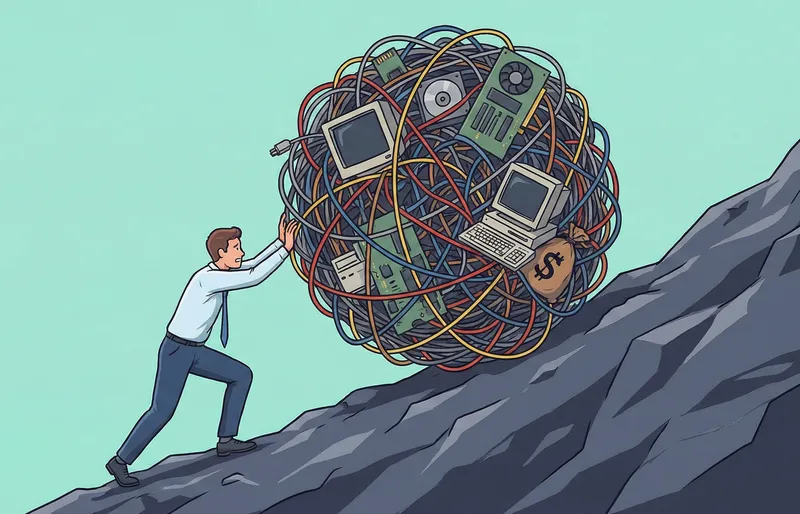
When you rush a build, you are taking out a loan against the future productivity of your team. The "principal" is the time you saved by skipping design patterns, tests, or documentation.
The "interest" is what kills you.
In a structured environment, adding a new feature might take three days. In a codebase riddled with the artifacts of "vibe coding"—massive god-objects, tightly coupled components, and copy-pasted logic—that same feature might take three weeks. Why? Because developers spend 80% of their time acting as archaeologists, trying to decipher how the existing code works without breaking it, rather than building the new functionality.
2. Scalability: The Ceiling You Didn't See Coming
"Quick builds" are almost always optimized for the present moment. They are designed to handle the current user base, or just the demo data.
When you code without structure, you rarely think about N+1 query problems, connection pooling limits, or efficient caching strategies. You are focused on making the input produce the correct output once.
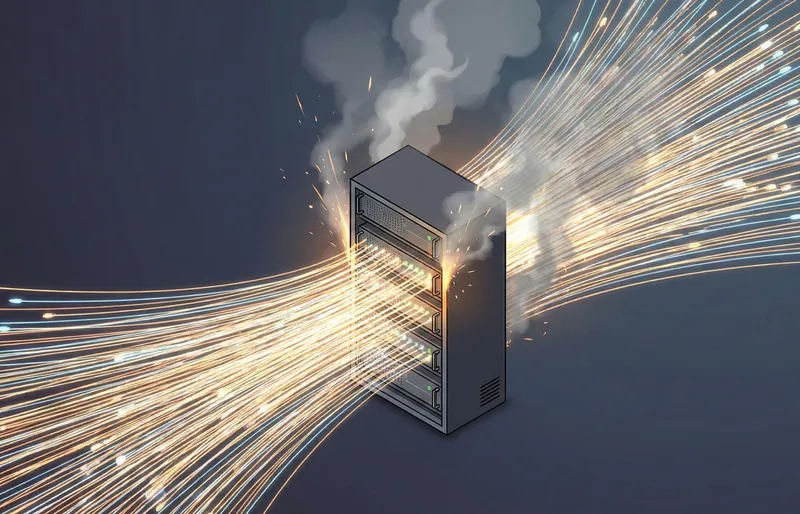
Imagine that Friday afternoon integration suddenly gets hit with 50,000 concurrent requests. The unstructured code—perhaps relying on synchronous calls to third-party APIs or inefficient database table scans—will buckle. The system slows to a crawl, databases lock up, and the "heroic" feature becomes the primary cause of a SEV1 outage.
Structured development involves capacity planning and designing for failure. Unstructured development hopes for the best.
3. The Maintenance Nightmare (The Swamp)
The most insidious cost of unstructured development falls on the human beings maintaining the system.
Six months after the "quick build," the original author has likely moved teams or left the company. A critical bug is discovered in that Friday afternoon module. A new developer is assigned to fix it.

They open the file. It’s 3,000 lines long. Variable names like temp_data_final_v2 abound. There are zero comments explaining why a bizarre workaround exists. Functions have side effects that change global state unpredictably.
This is the maintenance nightmare. The code is brittle; touching one component breaks three unrelated ones. The team becomes demoralized because they feel incompetent, struggling with a puzzle missing half its pieces. Velocity plummets because every ticket becomes an investigation rather than an implementation.
The Pivot: Maintainability vs. Speed
The fundamental tension here is the perceived trade-off between system maintainability and production speed.
Business stakeholders often view structure, testing, and architecture reviews as "red tape" that slows down innovation. And sometimes, in rigid corporate environments, they are right.
However, "vibe coding" is an overcorrection in the other direction. It is speed without direction.
You might lose the first sprint by taking the time to design the architecture properly. But you will win the next fifty sprints because your codebase is comprehensible, your tests catch regressions instantly, and your components are decoupled enough to be modified safely.
The Solution: Deterministic Development vs. Chaos
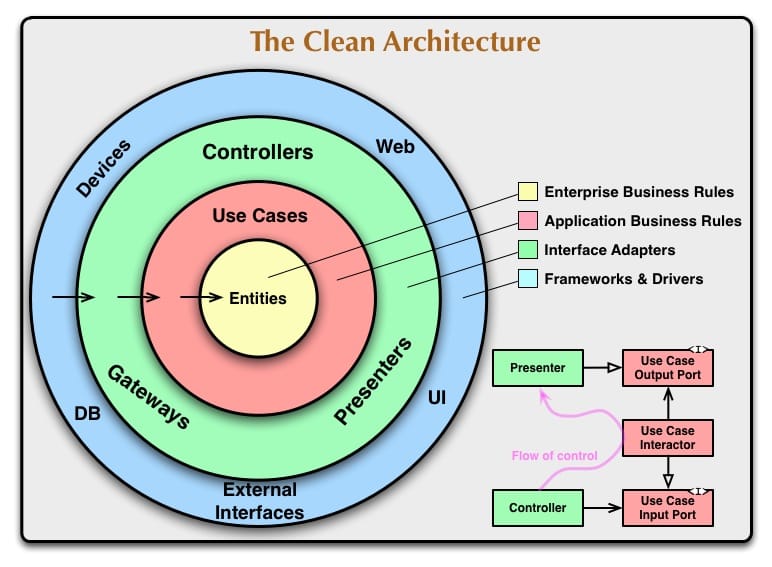
The fundamental tension is the trade-off between maintainability and production speed. The traditional fix is more "red tape," but there is a more efficient path: Deterministic Scaffolding.
Instead of hand-coding every basic structure from scratch—where human error and "vibes" creep in—modern teams are turning to structured Low-Code/No-Code environments.
How to Avoid the Trap
Moving from chaos to discipline requires a cultural shift and the right toolkit:
- Shift Left on Architecture: Don't code until you have a plan. Use technical design docs to think through data models before the first line of logic is written.
- Leverage Deterministic Tooling: This is where tools like RadSystems Studio shine. Unlike "black box" no-code tools, RadSystems is deterministic; it scaffolds your database into a fully functional app using tried and trusted templates in standard frameworks like NodeJS or Laravel.
- Structured Output: Because the code is generated based on professional standards, it arrives well-commented and organized. You get the "quick build" speed without the "maintenance nightmare" aftermath.
- Expert Support: Avoid being "left high and dry." Using a supported platform means that when you need to expand complex business logic, you have a technical team backing the core framework, ensuring your customizations don't break the system's integrity.
Conclusion
True engineering isn't just about making it work today; it's about ensuring it doesn't collapse tomorrow. By utilizing structured scaffolding and deterministic tools, you can achieve the speed of a "quick build" with the reliability of a high-end enterprise architecture.