

Low-Code for Startups: Can You Launch Without a Full Dev Team?
Discover how low-code platforms like Radsystems help founders build MVPs faster, reduce costs, and scale confidently in 2026.
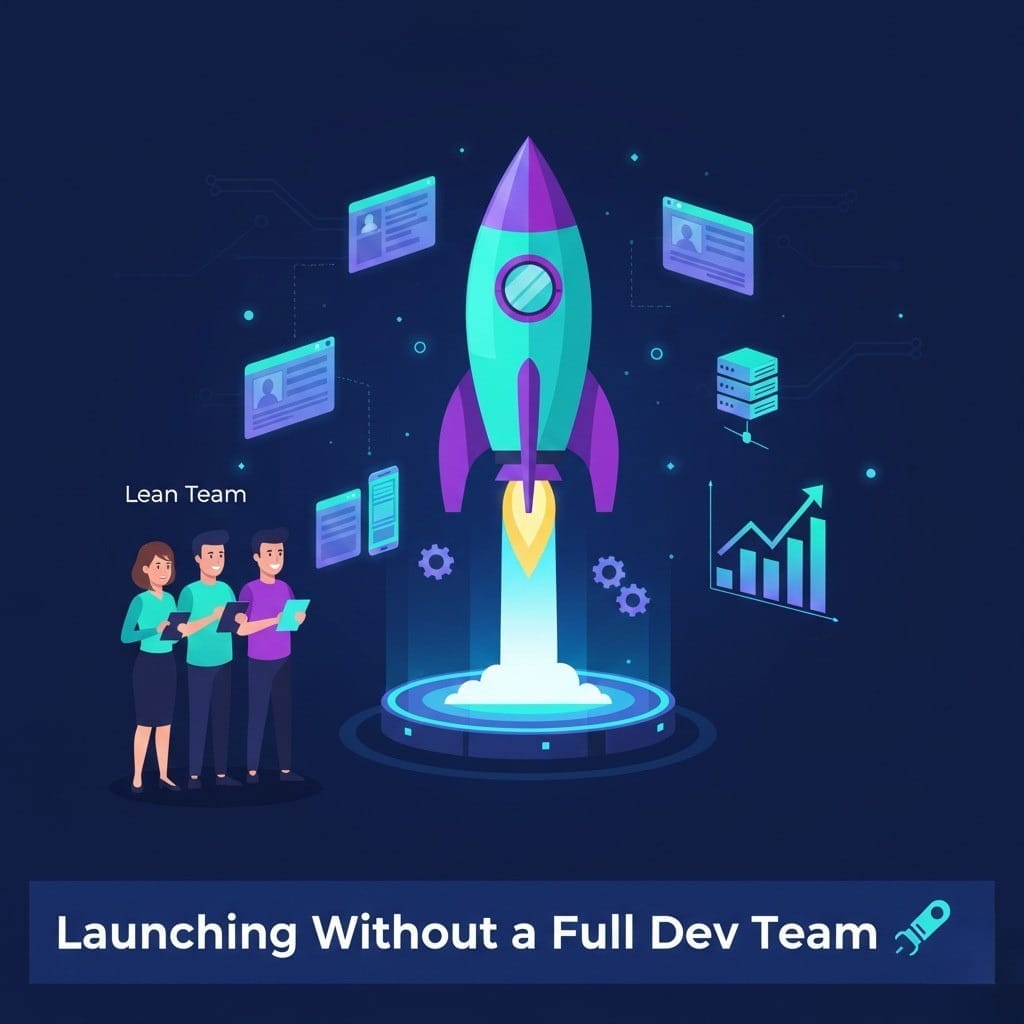
Launching a startup has never been easier, or more competitive. Founders are expected to move quickly, validate ideas efficiently, and conserve capital while still building products that can scale. Traditionally, achieving this meant assembling a full development team made up of frontend engineers, backend engineers, DevOps specialists, and designers. For early-stage startups operating on limited runway, that structure can be both expensive and time-consuming.
In 2026, however, the landscape has shifted. Low-code development platforms are redefining how startups build and launch software products. The conversation is no longer centred on whether you can afford a full development team, but whether you truly need one to bring your idea to market. For many startups, the answer is clear: you can launch successfully without assembling a large technical team from day one.
The Startup Dilemma: Speed vs. Resources
Every startup faces a fundamental tension in its early stages. You must validate your idea quickly, impress early adopters and potential investors, and preserve as much capital as possible. Yet building a scalable application from scratch requires significant technical expertise and time. Hiring multiple developers too early can rapidly deplete funding before product-market fit is even achieved.
This is where low-code platforms become more than just convenient tools, they become strategic assets. They allow startups to accelerate development while maintaining structural integrity, giving founders the ability to move fast without building on a fragile foundation.
What Low-Code Really Means for Startups
Low-code does not mean sacrificing quality or flexibility. Modern low-code IDEs generate structured, production-ready applications using established backend frameworks. Rather than writing every line of code manually, developers can focus on the core business logic while the platform automates foundational components such as CRUD operations, authentication systems, role-based access control, database scaffolding, and administrative dashboards.
Platforms like RadSystems Studio enable founders and small teams to generate applications using powerful frameworks such as Laravel, ASP.NET Core, and Node.js while still maintaining full access to the source code. This is crucial for startups that require rapid development without sacrificing long-term scalability or customization. In essence, low-code becomes a force multiplier for lean teams.
Launching Without a Full Dev Team
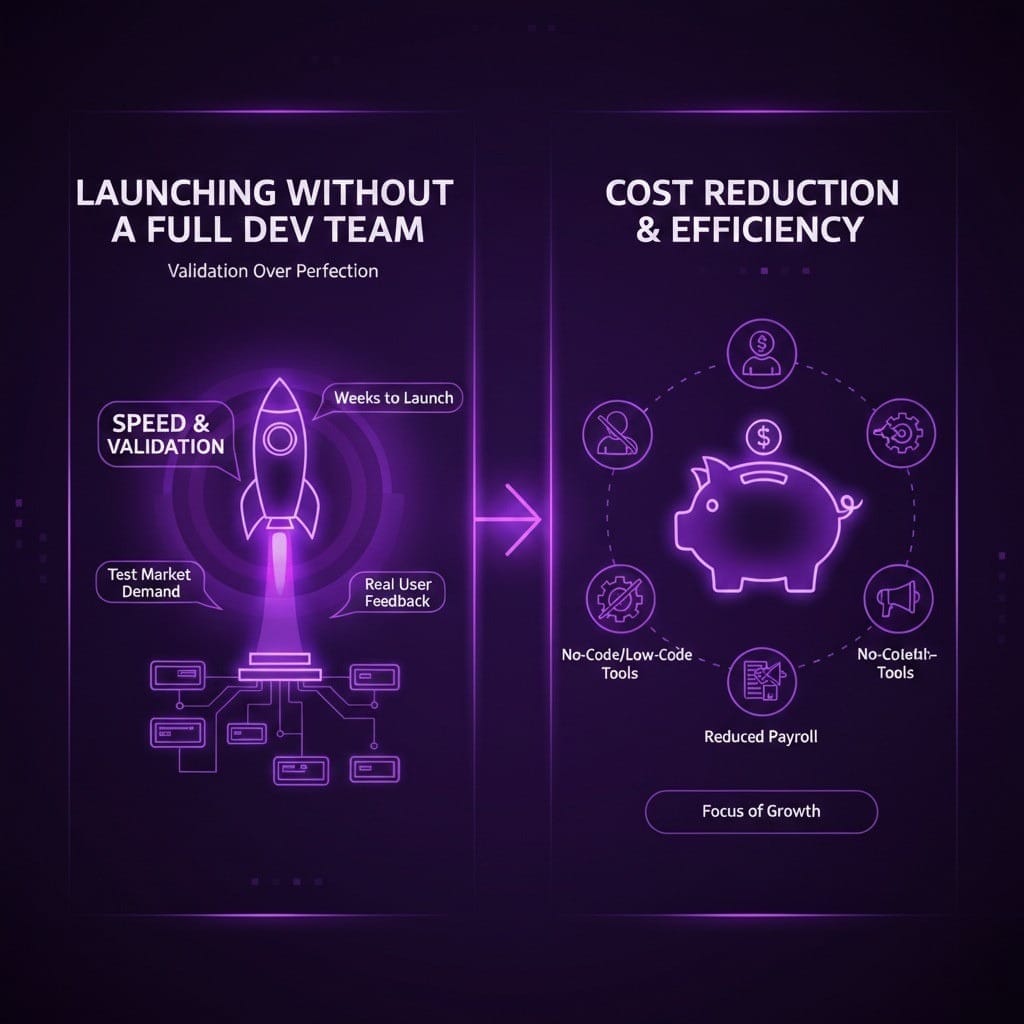
For early-stage startups, perfection is not the goal, validation is. A low-code approach dramatically reduces development time by automating the structural backbone of an application. Instead of spending weeks building authentication systems and dashboards, teams can generate them in hours and focus on refining the product’s unique value proposition.
This acceleration allows startups to launch in weeks rather than months, test market demand sooner, and iterate based on real user feedback. Speed, in the startup ecosystem, is often the difference between survival and stagnation.
Beyond speed, cost reduction is another major advantage. Hiring a full in-house development team represents one of the largest early expenses for a startup. Low-code tools empower small technical teams or even technically capable founders to accomplish what previously required multiple engineers. By reducing payroll costs, outsourcing expenses, and infrastructure setup time, startups can redirect resources toward marketing, customer acquisition, and product improvement.
Scalability and Flexibility from Day One
A common misconception is that low-code solutions lack scalability. While earlier generations of such tools had limitations, modern platforms generate structured backend systems built on enterprise-grade frameworks. When properly implemented, low-code applications can handle growing user bases, increasing data volumes, complex permission hierarchies, and multi-role SaaS environments.
Importantly, startups do not need to rebuild from scratch once traction is achieved. With full code ownership, developers can extend functionality, integrate third-party APIs, and customize features as the business evolves. This eliminates the fear of vendor lock-in and ensures long-term adaptability.
Low-code does not remove the need for developers entirely. Highly performance-intensive systems, advanced artificial intelligence applications, or deeply customized enterprise solutions may still require dedicated engineering expertise. However, for most SaaS platforms, client portals, admin dashboards, internal tools, and B2B applications, low-code significantly lowers the barrier to entry and reduces the size of the initial team required.
The Strategic Advantage in 2026
In 2026, the startups that win are those that move fastest and allocate resources wisely. Companies that validate quickly, iterate intelligently, and conserve capital outperform those trapped in lengthy development cycles. Low-code platforms are no longer shortcuts; they are strategic enablers that allow lean teams to compete with larger, better-funded organizations.
Launching without a full development team is not about cutting corners. It is about building efficiently, focusing on what truly differentiates your product, and leveraging modern tools to accelerate growth.
Startups no longer have to choose between speed and scalability. With the right low-code IDE, founders can launch faster, reduce development costs, and still build on a strong technical foundation that supports long-term expansion.
The real question is not whether low-code replaces developers. It is whether startups can afford to ignore tools that accelerate innovation and preserve runway.
Ready to Launch Faster?
If you are building a startup and want to accelerate your MVP without sacrificing scalability or code ownership, discover how RadSystems’ low-code platform helps founders build MVPs faster, reduce costs, and scale confidently in 2026.
Start your free trial today and accelerate your MVP with RadSystems!